
Yes, you absolutely need broad-spectrum SPF 50 on cloudy monsoon days. Up to 80% of UV rays penetrate through cloud cover, which means that grey, rainy sky outside your window is not a zero-UV sky. Your skin is still being exposed, whether you're catching a bus in Mumbai's drizzle or standing under a covered pandal at a monsoon wedding.
The real barrier to consistent monsoon sun protection isn't a lack of awareness, most people know sunscreen matters. It's the sticky, suffocating texture of traditional sunscreens layered on top of 80%+ humidity. This is exactly the problem an aqua gel sunscreen is built to solve, and understanding how to use one correctly during monsoon makes the difference between skipping SPF altogether and actually protecting your skin every single day.
Why Monsoon Humidity Changes Your Sunscreen Needs
Humidity doesn't just make you feel sweaty, it actively changes how sunscreen behaves on your face. When a heavy, cream-based sunscreen mixes with sweat and excess sebum, it forms a greasy film that sits on the skin's surface rather than absorbing. This film leads to pilling under makeup, clogged pores, and the "melting off" feeling that makes people abandon SPF altogether by July.
An aqua gel sunscreen is formulated differently. It's a water-based sunscreen that uses lightweight humectants, ingredients that draw moisture into the skin rather than sealing it under an oily layer, combined with modern UV filters. The result is a breathable, non-occlusive layer that sits comfortably on the skin instead of suffocating it, which is exactly what monsoon skin needs.
You'll also want to understand PA++++, a rating that often gets ignored. SPF measures protection against UVB rays, the ones responsible for sunburn. PA measures protection against UVA rays, which cause tanning, pigmentation, and premature ageing. UVA rays penetrate clouds and glass far more easily than UVB rays, which is precisely why PA++++ matters during monsoon and on days you're mostly indoors near a window.
Step-by-Step Guide: How to Apply Aqua Gel Sunscreen in the Monsoon
Scenario A: The Office Commute
Step 1: Cleanse and tone.
Start with a gentle cleanse to remove overnight sweat and any residual oil, then follow with a light toner to prep your skin. This ensures your sunscreen sits on clean, balanced skin rather than a layer of overnight buildup.
Step 2: Apply using the two-finger rule.
Squeeze out two full fingers' length of aqua gel sunscreen for your face and neck. Because it's a water-based sunscreen, it absorbs into the skin within 30–60 seconds without the white, greasy residue heavier formulas leave behind.
Step 3: Wait 60 seconds before stepping out.
Give the formula a full minute to set before heading into humid air or applying makeup. This short wait prevents pilling and helps the UV filters settle evenly across your skin.
Scenario B: The Monsoon Wedding or Outdoor Event
If you know you'll be sweating heavily or getting slightly damp, think outdoor mandaps or a garba night with intermittent drizzle, prep your skin the same way, but layer your sunscreen instead of applying it once. Apply a light first layer, let it set for a minute, then follow with a second thin layer. This builds a more even, water-resistant film that holds up better under heavy makeup and extended outdoor exposure than a single thick application ever will.
3 Common Monsoon Sunscreen Mistakes You Are Probably Making
Using too little product.
Because people fear the sticky, heavy feeling of sunscreen, they instinctively under-apply using half the recommended amount to avoid looking shiny. An aqua gel sunscreen removes this trade-off entirely, since its water-based sunscreen texture lets you use the full recommended amount without ending up looking like a grease slick.
Skipping the ears and neck.
UV rays bounce off wet surfaces like puddles and rain-soaked roads, meaning your neck and ears are catching more indirect UV exposure during monsoon than you'd expect. These areas are consistently forgotten and consistently exposed, don't skip them.
Forgetting to reapply after getting wet.
If you get caught in a sudden downpour and wipe your face dry with a tissue, you've just wiped off your UV filters along with the rainwater. The fix is the "blot and reapply" method: gently blot excess moisture with a tissue, let your skin air-dry for a few seconds, then reapply a light layer of sunscreen rather than skipping it until you get home.
The Aviva Beauty Routine for Sweaty, Humid Days
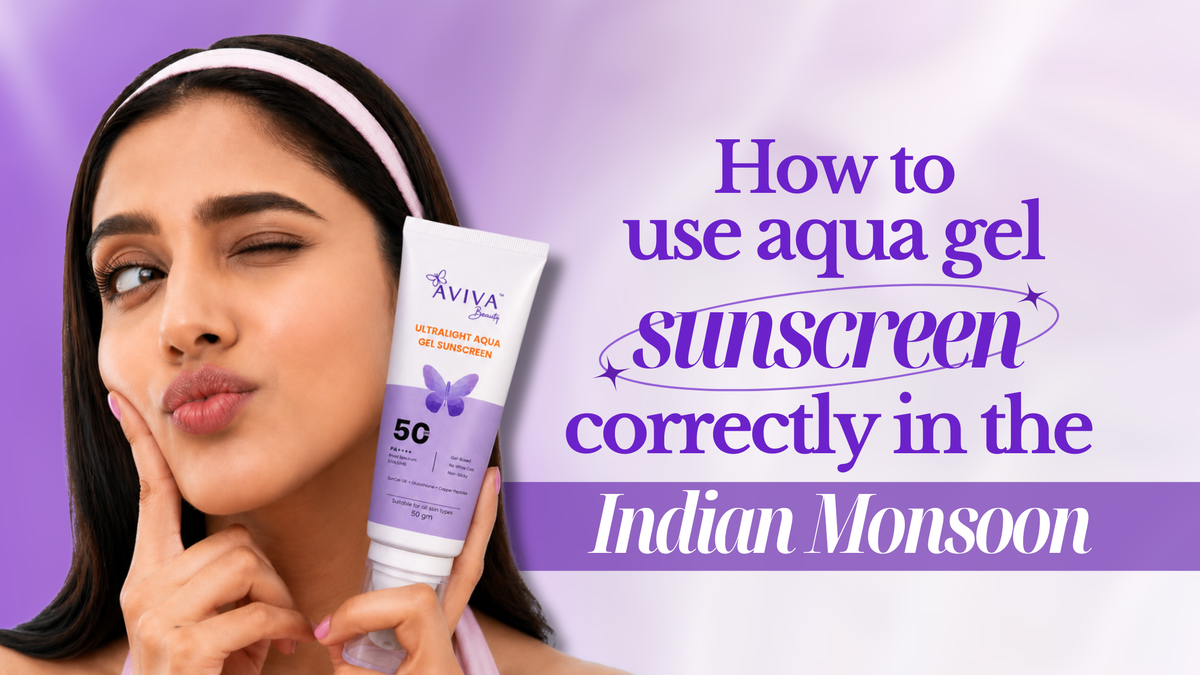
If you're looking for a formula built around exactly this problem, Aviva Beauty's Ultralight Aqua Gel Sunscreen offers SPF 50 PA++++ protection in a water-based, non-comedogenic gel that leaves zero white cast, a genuine concern for most Indian skin tones. For best results, pair it with a gentle prep routine using the CTM combo kit, which sets up your skin with the right cleanse and hydration before sunscreen goes on. If you want a deeper look at why formula matters as much as SPF number, our guide on the best sunscreen for glowing skin in India breaks that down further.
FAQ
Q1: Do I need sunscreen on a rainy day in India?
Yes, up to 80% of UV rays pass through cloud cover, so a rainy or overcast sky does not mean zero UV exposure. Skipping sunscreen on cloudy monsoon days still leaves your skin vulnerable to UVA-driven tanning, pigmentation, and premature ageing.
Q2: What is an aqua gel sunscreen?
An aqua gel sunscreen is a water-based formula that uses lightweight humectants and modern UV filters to create a breathable, non-greasy layer of protection. Unlike thick cream sunscreens, it absorbs quickly into the skin and doesn't mix with sweat to form a heavy film.
Q3: Is a water-based sunscreen better for humid weather?
Yes, a water-based sunscreen is generally better suited to humid weather because it doesn't combine with sweat and sebum to create the greasy, pore-clogging film that heavier cream formulas often do. It absorbs faster, feels lighter, and holds up better under makeup during monsoon humidity.
Q4: How do I reapply sunscreen if my face is wet from the rain?
Gently blot your face dry with a tissue first, never rub, as this can irritate the skin. Let it air-dry for a few seconds, then reapply a light layer of sunscreen rather than skipping reapplication, since wiping your face also wipes away your existing UV filters.
Q5: Does aqua gel sunscreen leave a white cast on dark skin?
A well-formulated aqua gel sunscreen, like Aviva Beauty's Ultralight Aqua Gel Sunscreen SPF 50 PA++++, is designed to leave zero white cast on all skin tones, including deeper Indian skin tones. This is one of the main reasons water-based gel formulas are recommended over traditional mineral-heavy sunscreens for daily use.